
located along Whittier Boulevard in Whittier, California, King Richard’s Antique Vintage Center is a well-established, brick-and-mortar antique and vintage shopping destination known for its large scale and vendor-curated format. Operating as a multi-level, indoor antique marketplace, the center brings together independent dealers who manage their own booths, creating a wide and regularly changing selection of antiques and vintage collectibles under one roof. For shoppers searching for a reliable antique store near them, it stands out for its size, variety, and in-person browsing experience. Unlike a single-owner antique shop or a temporary outdoor flea market, this antique center is built for extended, unhurried exploration. Multiple levels of indoor shopping encourage discovery at a flexible pace, making it a frequent stop for visitors from nearby cities such as Pico Rivera, La Habra, Downey, and other parts of the greater Los Angeles area. Its location along a major Southern California corridor places it naturally within the regional network highlighted on Antique-StoresNear.me. Whether you are a dedicated collector, an interior designer sourcing period pieces, or a casual shopper interested in historical décor and vintage finds, King Richard’s Antique Vintage Center offers a structured yet eclectic environment that reflects the depth of the regional antique scene. It also represents a notable example within the broader landscape of antique stores in California, where large-scale, vendor-curated antique malls continue to attract shoppers seeking authenticity, variety, and a true in-person shopping experience.
What Is King Richard’s Antique Vintage Center?
King Richard’s Antique Vintage Center is a large, multi-vendor antique and vintage retail marketplace operating from a permanent, indoor, brick-and-mortar location in Whittier, California. Instead of functioning as a single-owner antique shop, the center brings together independent dealers who manage their own booths, each curating inventory based on specific eras, styles, or collectible categories. This vendor-based structure is what defines the center as an antique mall rather than a traditional antique store. Inventory is arranged by dealer rather than by department, which allows for a wide range of furniture, decorative objects, collectibles, and personal accessories to coexist across multiple levels. The decentralized model encourages regular inventory rotation and creates a discovery-driven shopping experience that appeals to both casual visitors and experienced collectors from Whittier and surrounding Los Angeles County communities.
Antique Mall vs. Traditional Antique Store
| Aspect | Multi-Vendor Antique Mall | Traditional Antique Store |
| Ownership | Multiple independent dealers | Single owner or buyer |
| Inventory | Booth-curated and rotating | Centrally curated |
| Variety | Broad range of eras and styles | Usually narrower focus |
| Browsing Style | Exploratory, time-flexible | More directed |
| Pricing | Set by individual dealers | Set by one seller |
This distinction helps clarify expectations for visitors searching for an antique store in or near Whittier. While both formats offer antiques, a multi-dealer environment provides greater variety and a more discovery-driven experience.
Who Typically Shops Here
The center commonly appeals to:
- Local Whittier residents seeking unique furnishings or décor
- Visitors from nearby cities such as Pico Rivera, La Habra, and Downey
- Collectors interested in comparing multiple dealers in one location
- Interior designers sourcing statement pieces and accents
- Casual shoppers drawn to vintage and nostalgic items
Because it is a permanent, indoor marketplace rather than a temporary event, visitors can expect a more predictable shopping environment than a flea market, while still benefiting from the variety created by many independent dealers.
Where Is King Richard’s Antique Vintage Center Located?
King Ric hard’s Antique Vintage Center is located at 12301 Whittier Boulevard, Whittier, California 90602, within an established commercial corridor in southeastern Los Angeles County. The center sits near the intersection of Whittier Boulevard and Penn Street, a location that has long served as a major access route connecting Whittier with surrounding communities. From a regional standpoint, the location is convenient for visitors traveling from the greater Los Angeles metropolitan area. The property is situated less than two miles southeast of the I-605 freeway, making it accessible for shoppers arriving from cities across Los Angeles County and nearby parts of Southern California. Many visitors reach the center via Whittier Boulevard rather than smaller residential streets, which simplifies navigation when using mapping applications. The surrounding area places the center within practical driving distance of nearby cities such as Pico Rivera, La Habra, Downey, and Norwalk, while still remaining a feasible day trip from central Los Angeles. Because it occupies a prominent, street-facing position rather than a hidden retail complex, first-time visitors generally find it easy to locate and revisit.
Nearby Cities & Drive-Time Context
| Nearby Area | Approximate Drive Time |
| Downtown Whittier | Within the city |
| Pico Rivera | ~10 minutes |
| La Habra | ~15 minutes |
| Downey | ~15–20 minutes |
| Norwalk | ~15 minutes |
| Downtown Los Angeles | ~30 minutes |
This placement supports both local foot traffic and regional visitors looking for an antique and vintage shopping destination within reasonable driving distance of Los Angeles.
History & Atmosphere: A Longstanding Whittier Destination
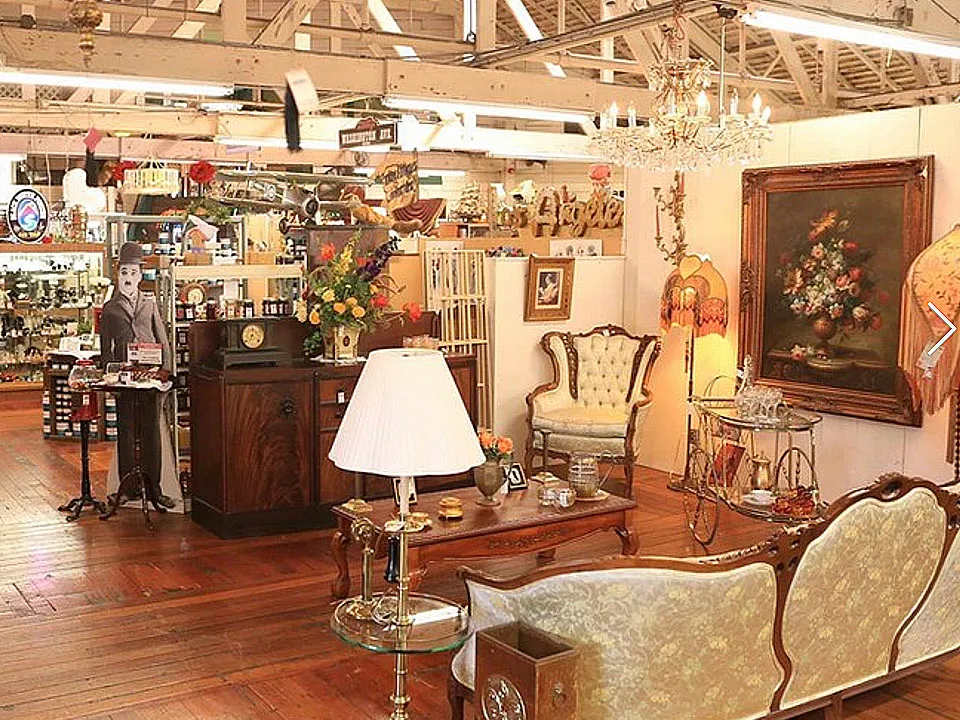
King Richard’s Antique Vintage Center is housed in an early-20th-century industrial building that reflects Whittier’s agricultural past. The structure was originally built between 1902 and 1903 as part of the Whittier Citrus Association, when citrus packing and rail transport defined the local economy. After the decline of large-scale citrus operations, the building later transitioned into an antique and vintage marketplace, allowing its physical character to remain intact while its purpose evolved. Today, the atmosphere inside the center is shaped by this industrial legacy. Original wood elements, high ceilings, and expansive open floors give the space a layered, timeworn feel that pairs naturally with antiques and vintage goods. Rather than a polished retail showroom, the setting feels immersive and exploratory, encouraging visitors to browse slowly and spend extended time moving between levels and dealer booths.
Key Historical & Atmospheric Elements
- Early 1900s industrial origins tied to Whittier’s citrus industry
- Preserved structural features such as exposed wood and large interior volumes
- Multi-level layout that supports long, discovery-driven visits
- Time-capsule atmosphere often associated with nostalgia and exploration
Historic Context at a Glance
| Aspect | Details |
| Original use | Citrus packing and distribution facility |
| Construction era | Early 20th century (circa 1902–1903) |
| Current role | Multi-vendor antique and vintage center |
| Atmosphere | Industrial, immersive, and historically layered |
Together, the preserved architecture and adaptive reuse create an environment that feels closely tied to Whittier’s history. The building itself becomes part of the experience, offering visitors a setting where local heritage and antique discovery naturally intersect.
What You’ll Find Inside: A Multi-Dealer Marketplace
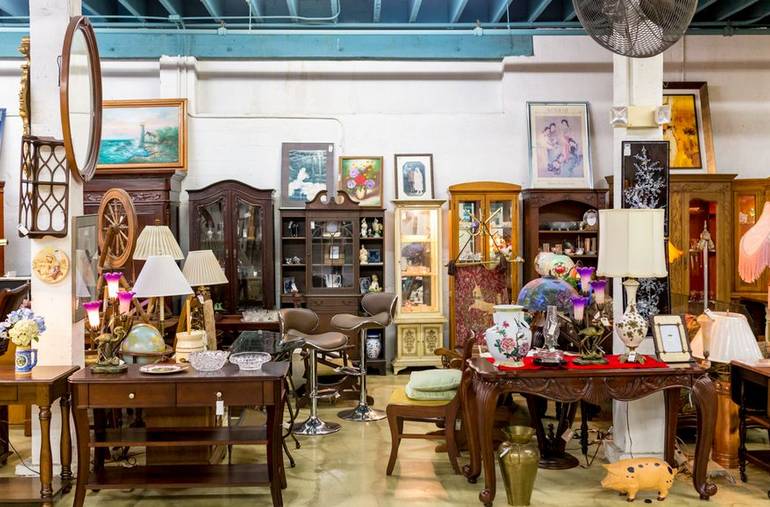
Inside King Richard’s Antique Vintage Center, the shopping experience is defined by its multi-dealer structure. Independent vendors operate individual booths, each curated around specific interests, eras, or collectible categories. This decentralized model creates a broad and eclectic inventory that changes regularly as dealers refresh stock from estates, collections, and specialty sources. Rather than being organized like a department store, merchandise is grouped by booth, encouraging exploratory browsing. Visitors often encounter furniture, collectibles, and accessories side by side, making discovery a central part of the experience. Because inventory rotates frequently, repeat visits often reveal entirely new selections.
Furniture & Vintage Home Décor
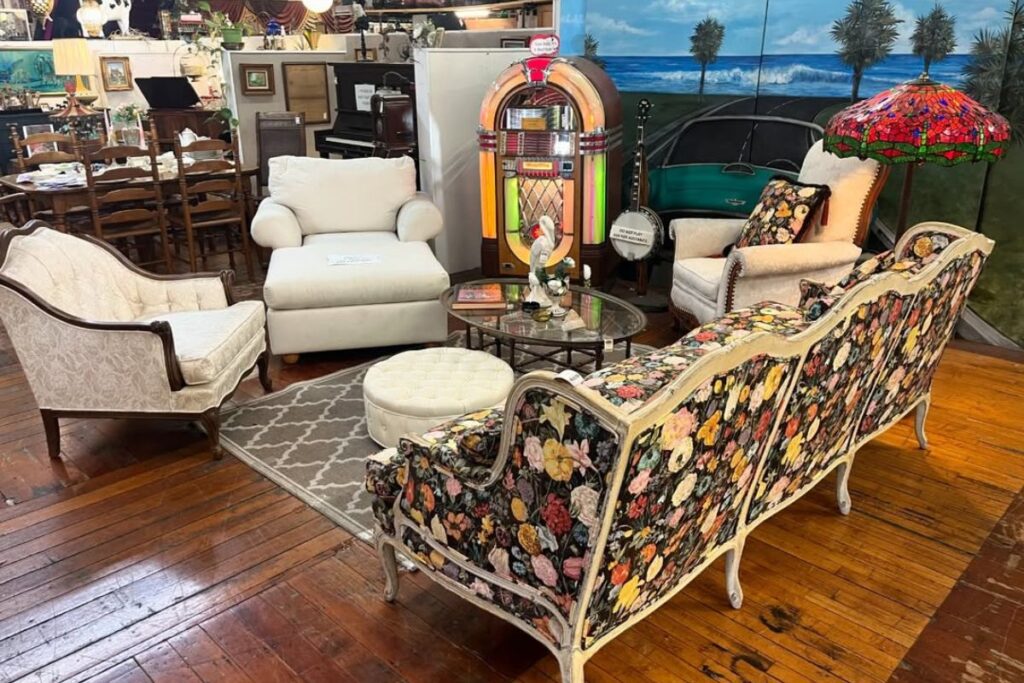
Furniture and home décor are among the most prominent categories throughout the center. Shoppers commonly encounter pieces from a wide range of periods, including Victorian, early 20th century, mid-century, and retro styles. Many items reflect traditional craftsmanship, with solid woods such as oak, walnut, mahogany, and teak appearing across different eras. Vintage décor fills out these displays and often includes lighting, glassware, ceramics, and architectural accents. Southern California influences are visible in styles that blend classic antiques with mid-century and industrial elements.
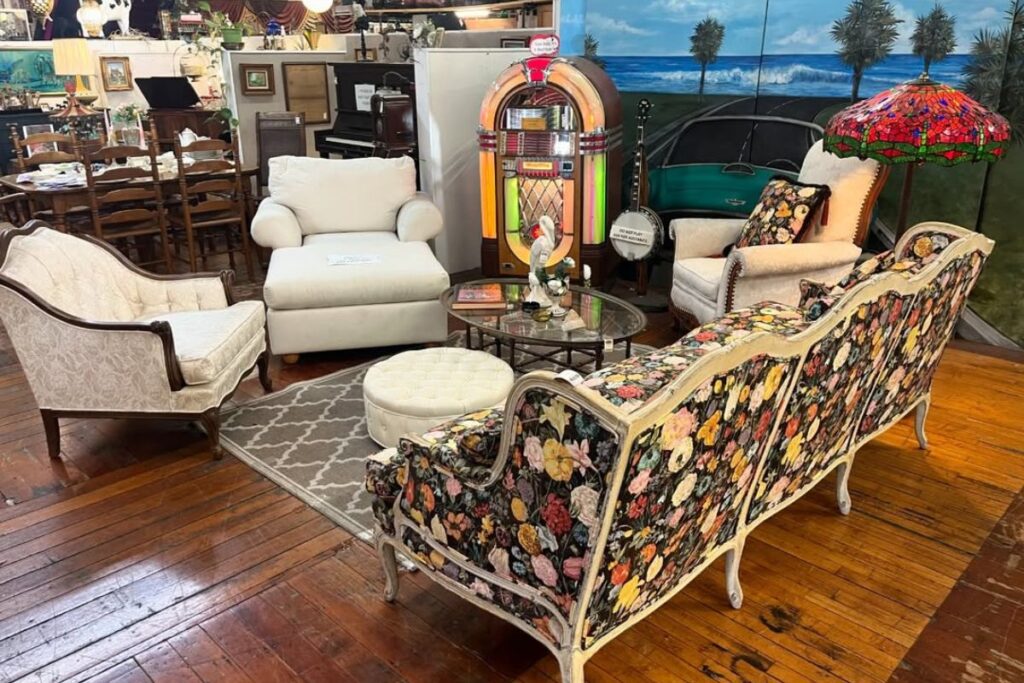
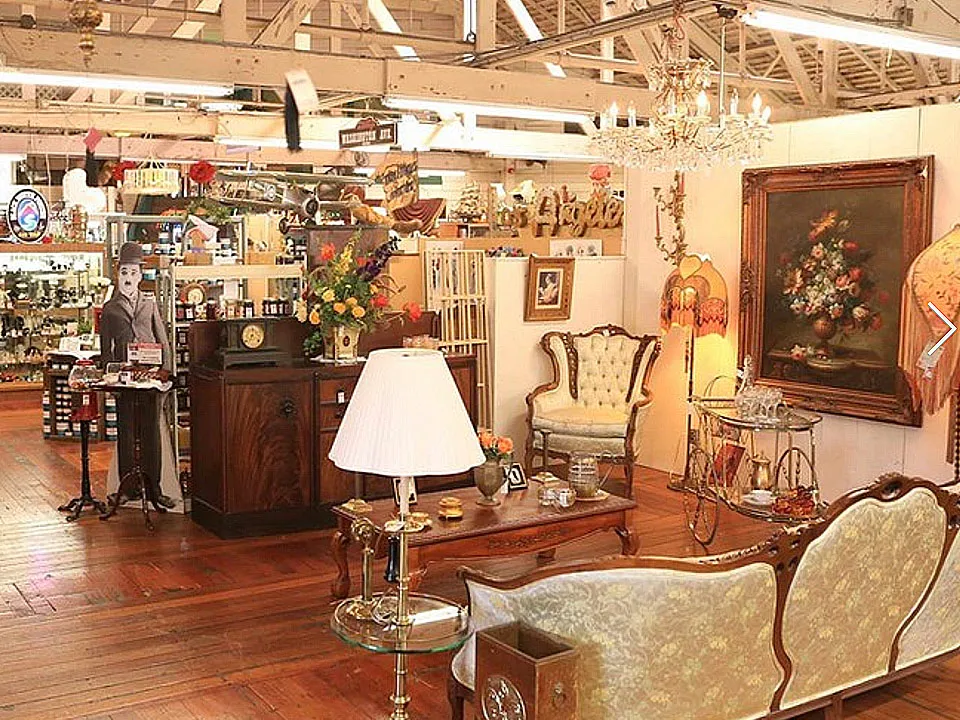
Furniture and décor commonly include:
- Chairs, desks, sideboards, dressers, and china cabinets
- Decorative lighting such as lamps, sconces, and chandeliers
- Glassware and ceramics, including Depression-era styles
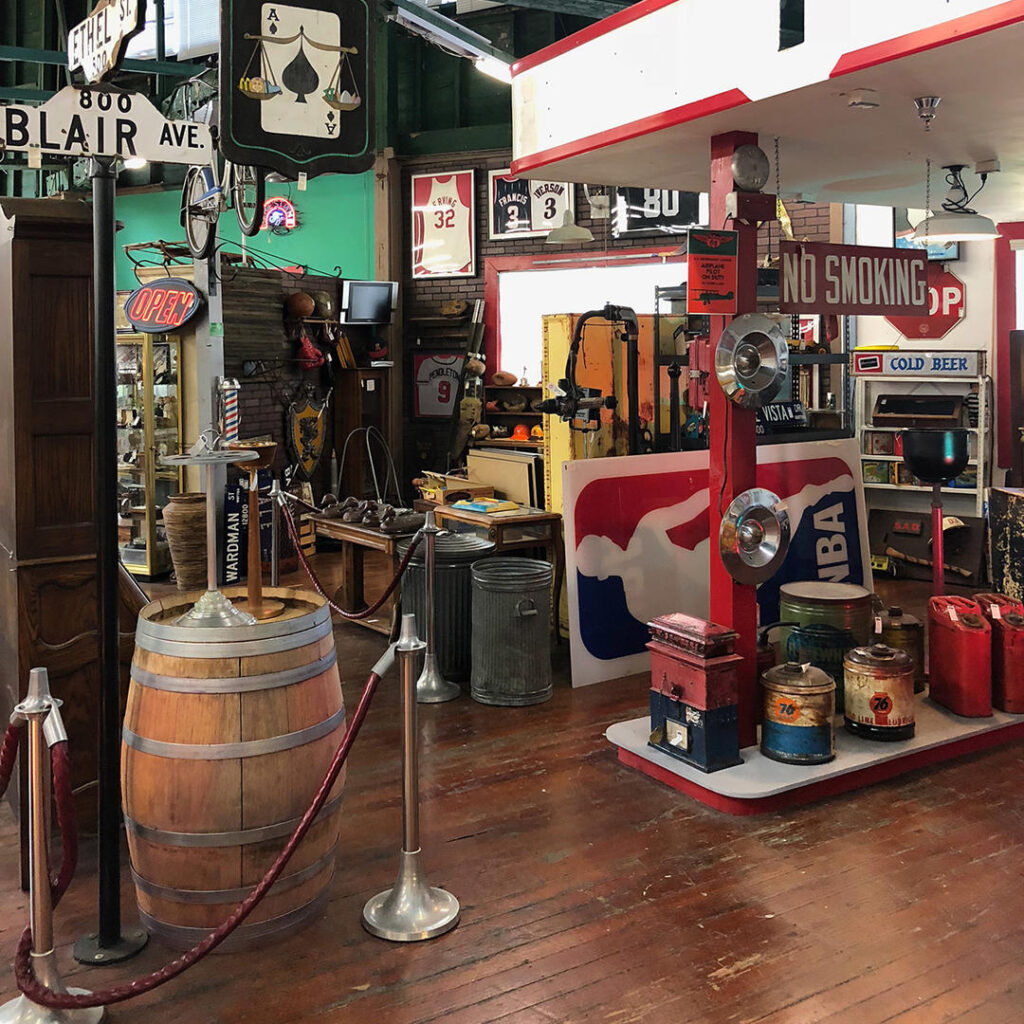
- Architectural salvage, signage, and statement décor pieces
Collectibles, Vinyl & Memorabilia
Collectibles form a dense and highly varied category, appealing to both casual browsers and focused collectors. Vinyl records are a recurring highlight, with several dealers specializing in different genres and eras. Crate-digging is a common sight, as visitors search for both everyday albums and harder-to-find pressings.
Memorabilia and small collectibles span many themes, often reflecting 20th-century popular culture and Americana. These items tend to be highly specialized, depending on the dealer’s focus.
This section often features:
- Vinyl records and vintage audio media
- Toys, action figures, and comic-related items
- Paper ephemera such as postcards, signage, and advertisements
- Coins, stamps, and small historical collectibles
Jewelry, Fashion & Personal Accessories
Jewelry and personal accessories are typically displayed in secure or carefully arranged booths, emphasizing condition and detail. Estate jewelry is common, ranging from fine pieces to costume designs associated with specific periods. Watches, brooches, and rings often appear alongside smaller personal items. Vintage fashion offerings tend to focus on accessories rather than full wardrobes, making them easier to browse and collect.
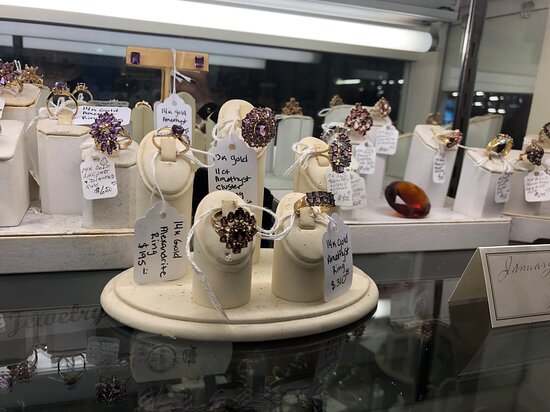
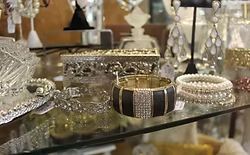
Common items in this category include:
- Estate and vintage jewelry
- Watches, pins, and brooches
- Handbags, scarves, hats, and belts
- Personal accessories tied to mid-century and earlier styles
Together, these categories create a layered marketplace where large furniture pieces and small personal collectibles coexist. The result is a shopping environment designed for extended browsing, repeat visits, and discovery-driven exploration rather than quick, targeted purchases.
The King Richard’s Shopping Experience
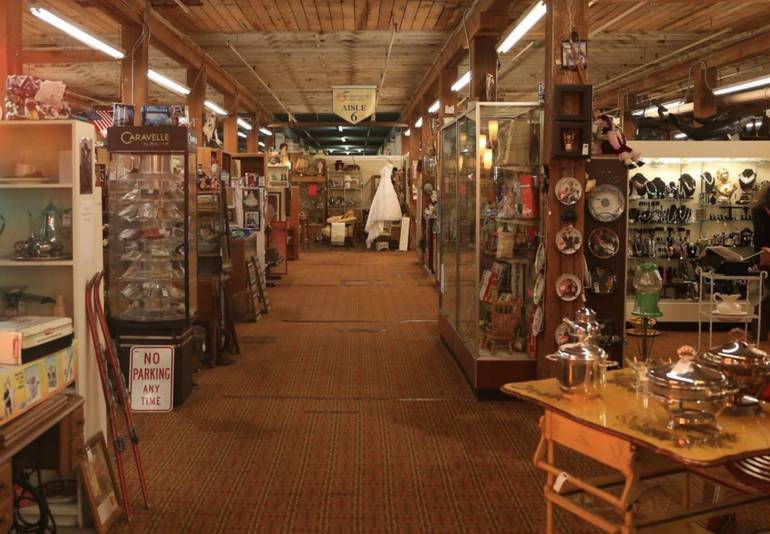
The shopping experience at King Richard’s Antique Vintage Center is best described as immersive and discovery-driven. The center’s large, multi-level layout encourages visitors to browse freely rather than follow a fixed path, creating a “treasure hunt” atmosphere where exploration is part of the appeal. With hundreds of independently curated booths, visual variety is constant, and shoppers often encounter new styles, eras, and materials within just a few steps. Because inventory rotates regularly and booths are styled differently by each dealer, no two visits feel the same. Some spaces are arranged like small rooms, while others are densely packed with collectibles, inviting closer inspection. This scale and diversity make the center well suited for longer visits, particularly for shoppers coming from across Whittier and greater Los Angeles County.
What defines the overall experience:
- Large, multi-floor indoor setting designed for extended browsing
- Eclectic mix of antiques and vintage goods across many categories
- Individually styled booths that create visual variety
- Relaxed pace with minimal pressure to purchase
Browsing, Discovery & Visual Exploration
Browsing at King Richard’s centers on visual exploration and flexible pacing. Visitors move booth to booth, often slowing down to scan shelves, furniture groupings, and display cases filled with smaller collectibles. The dense presentation encourages careful looking, as notable pieces may be tucked into corners or layered among other items. The experience adapts easily to different visit styles. Some shoppers stop briefly for inspiration, while others dedicate several hours to exploring multiple levels. The layout rewards patience, with unexpected finds often appearing later in a visit rather than at first glance.
Common browsing patterns and tips:
- Plan extra time; seeing everything in one visit is unlikely
- Wear comfortable shoes for extended walking and standing
- If a unique item stands out, consider it carefully—inventory changes quickly
- Compare similar items across booths, as pricing and selection vary
Typical visit pacing
| Visit Type | Approx. Time | Focus |
| Short visit | 30–60 minutes | Visual inspiration |
| Standard visit | 1.5–2 hours | Multiple levels and booths |
| Extended visit | 2–4 hours | In-depth browsing and comparison |
Overall, the shopping experience emphasizes discovery over efficiency. The combination of scale, visual density, and independently curated booths makes browsing feel open-ended and engaging, appealing to visitors who enjoy taking their time and uncovering one-of-a-kind finds.
King Richard’s vs. Thrift Stores & Flea Markets
When comparing King Richard’s Antique Vintage Center to thrift stores and flea markets, the distinction lies in curation, expertise, and consistency. King Richard’s operates as a permanent, indoor, multi-vendor antique marketplace where independent dealers rent booth space and curate inventory based on knowledge, sourcing, and historical value. This structure creates a more predictable and research-driven shopping environment. Thrift stores typically rely on donated goods and focus on volume rather than specialization. While occasional vintage items may appear, inventory often includes everyday household goods with limited historical context. Flea markets, on the other hand, offer variety and bargaining culture but are usually temporary, outdoor events with changing vendors, variable quality, and weather-dependent conditions. At King Richard’s, pricing is generally aligned with market value, condition, and rarity. Dealers often have background knowledge on their items and are sometimes open to negotiation, especially for bundled purchases. This contrasts with thrift stores’ fixed pricing and flea markets’ informal, timing-based negotiations.
Key Differences at a Glance
| Aspect | King Richard’s | Thrift Stores | Flea Markets |
| Business model | Independent dealer booths | Donation-based retail | Temporary vendor stalls |
| Inventory focus | Curated antiques & vintage | General secondhand goods | Mixed antiques, crafts, resale |
| Setting | Indoor, permanent | Indoor retail | Outdoor, event-based |
| Pricing approach | Market-informed, varies by dealer | Low, fixed | Negotiated |
| Product knowledge | Dealer expertise common | Limited staff knowledge | Varies widely |
| Visit reliability | Consistent weekly access | Daily | Limited dates |
Overall, King Richard’s occupies a middle ground between casual secondhand shopping and event-style markets. It appeals to shoppers who want curated selection, indoor comfort, and knowledgeable sellers—without the unpredictability of thrift store donations or flea market schedules.
Plan Your Visit to King Richard’s Antique Vintage Center
Planning a visit to King Richard’s Antique Vintage Center is simple, but a little preparation can greatly improve the experience. The center is located at 12301 Whittier Blvd, Whittier, CA 90602, along one of Whittier’s main commercial corridors. This makes it an easy drive for visitors coming from nearby Los Angeles County communities and a common stop for people searching for antique stores near me in Southern California. Because the marketplace spans multiple levels and covers a large indoor footprint, most visitors benefit from planning more than a quick stop. Casual browsers may spend an hour, while collectors and designers often stay much longer. Weekdays tend to be quieter, while weekends attract heavier foot traffic, especially from nearby cities.
Helpful planning considerations before arriving:
- Allocate enough time to explore multiple floors
- Wear comfortable shoes for extended walking
- Check current hours online before your visit
- Arrive earlier in the day for easier parking
Hours, Parking & Helpful Tips
Operating hours are generally consistent, but visitors should always confirm current listings through maps or the official website, as holiday schedules and special events can affect access.
Current Hours (Verify Before Visiting)
| Day | Typical Hours |
| Monday | 11:00 AM – 5:00 PM |
| Tuesday | Closed |
| Wednesday – Friday | 11:00 AM – 5:00 PM |
| Saturday – Sunday | 10:00 AM – 5:00 PM |
Parking Information
- Free on-site parking is available
- Free street parking is also available nearby
- Parking spaces can be tight on weekends, especially midday
- Arriving early helps reduce parking delays
Visitor Tips
- Plan at least 1–2 hours; longer visits are common
- Large bags and backpacks are typically not allowed inside
- Main floor is accessible; other levels may require stairs
- The historic building uses fans rather than full air conditioning, so warmer days may feel hot
- Prices vary by dealer, and polite negotiation is sometimes possible
With these details in mind, visiting King Richard’s fits naturally into local shopping routes and near-me antique searches. Its central Whittier Boulevard location, combined with a large indoor layout, makes it well suited for both planned trips and spontaneous visits.
FAQs About King Richard’s Antique Vintage Center
Below are concise answers to common questions people ask when researching King Richard’s Antique Vintage Center. These FAQs reflect real search behavior and visitor concerns related to location, size, access, and services.
What is King Richard’s Antique Vintage Center?
It is a large, indoor, multi-vendor antique and vintage marketplace housed in a historic early-1900s building. Independent dealers curate booths featuring antiques, vintage goods, and collectibles across many categories.
Where is it located?
The center is located at 12301 Whittier Blvd, Whittier, CA 90602, making it easily accessible for visitors from Whittier and surrounding Los Angeles County areas.
How large is the center?
It spans multiple levels within a sizable historic structure and is commonly described as one of the largest antique and vintage centers in California. Many visitors plan several hours to explore it fully.
What types of items are sold there?
Inventory often includes antique furniture, vintage décor, collectibles, vinyl records, jewelry, glassware, memorabilia, and architectural elements. Selection varies by dealer and changes frequently.
What are the typical hours?
The center is generally open Monday and Wednesday–Friday from 11:00 AM–5:00 PM, Saturday–Sunday from 10:00 AM–5:00 PM, and closed Tuesdays. Visitors should confirm current hours online before visiting.
Is parking available?
Yes. Free on-site parking and nearby street parking are available, though spaces can be limited during busy weekend hours.
Is the center wheelchair accessible?
The main floor is accessible, but access to other levels may require stairs.
Are pets or large bags allowed?
Only service animals are permitted. Large bags and backpacks are typically not allowed inside.
Are services like appraisals or repairs offered?
Yes. The center hosts periodic appraisal clinics and includes on-site services such as clock repair and related specialty vendors.
These FAQs help clarify what to expect, making it easier for visitors to plan a smooth visit and decide if King Richard’s fits their antique shopping needs in Whittier.


