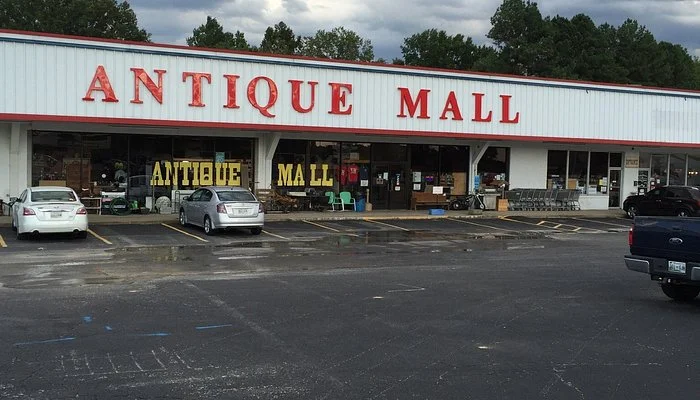
Elmer’s Barn in Coopers Mills, Maine is a long-standing antique store and flea-market-style destination known for its multi-floor barn, packed aisles, and discovery-driven shopping experience. Located along Route 17 in rural Lincoln County, it has earned a reputation as a distinctive Maine roadside attraction for antique hunters, collectors, and travelers exploring the Mid-Coast region.
Often called Elmer’s Barn of Junk and Dead Things, the barn offers a true treasure-hunt experience rather than a curated retail visit, blending antiques, collectibles, and oddities inside a historic three-story structure that reflects Maine’s deep connection to reuse, history, and material culture.
What Is Elmer’s Barn in Coopers Mills, Maine
Elmer’s Barn is a large, three-floor antique store and indoor flea market located in rural Mid-Coast Maine. Commonly known as Elmer’s Barn of Junk and Dead Things, it blends the functions of an antique mall, flea market, and roadside attraction into a single discovery-driven space. Rather than offering curated displays or themed rooms, the barn emphasizes exploration, chance finds, and hands-on browsing.
Founded in 1976, Elmer’s Barn operates inside a historic barn that once housed the Howe Fur Company. Today, it supports around 50 independent vendors, each contributing to a constantly shifting mix of antiques, vintage collectibles, Americana, and unusual objects. Inventory is intentionally dense and loosely organized, encouraging visitors to “dig” through packed aisles across multiple levels rather than follow a guided retail path.
What distinguishes Elmer’s Barn from traditional antique stores in Maine is its cultural role. It is not designed for quick transactions or targeted buying. Instead, it reflects the long-standing New England tradition of picking, reuse, and preservation. This identity—part junk barn, part flea market, part informal museum—has made Elmer’s Barn a recognized Maine roadside landmark and a recurring feature in regional antiques coverage.
Where Is Elmer’s Barn Located in Coopers Mills
Elmer’s Barn is located at 107 Rockland Road (Route 17), Coopers Mills, Maine 04341, in Lincoln County. The address is sometimes listed under Whitefield, Maine, because Coopers Mills is an unincorporated village within the town of Whitefield. Both place names refer to the same physical location, a distinction that is important for navigation and local search accuracy.
The barn sits directly along Maine State Route 17, a major corridor connecting Augusta with the Mid-Coast region. From downtown Augusta, Elmer’s Barn is roughly a 30–35 minute drive east, placing it within easy reach for travelers heading toward Wiscasset, Rockland, or other antique destinations along the coast. Its weathered exterior and outdoor displays are visible from the road, reinforcing its identity as a classic roadside stop rather than a hidden or appointment-only shop.
| Location Reference | Approximate Distance |
| Augusta, ME | ~12 miles west |
| Wiscasset, ME | ~15 miles south |
| Sheepscot General Store (Whitefield) | ~5–10 miles |
| Sheepscot River | Nearby |
On-site gravel parking is available for visitors, though conditions can become muddy during wet seasons, which is typical for rural Maine locations. The surrounding area retains a quiet, wooded character shaped by historic mill villages and river-based industry, providing geographic and cultural context for the barn’s long-standing presence in Coopers Mills.
The History and Origins of Elmer’s Barn
Elmer’s Barn was established in the early 1970s by Elmer A. Wilson, a respected Maine antique dealer whose career began long before the barn itself existed. Like many rural New England pickers of the era, Elmer sourced tools, salvage, and antiques directly from farms, mills, and estate clear-outs, often selling straight from his truck. His reputation for dry humor and hands-on negotiating became part of the barn’s identity early on.
The business first operated from a smaller barn on Howe Road in Whitefield, but expanding inventory soon required greater visibility. Elmer later acquired the former Howe Fur Company building on Route 17, placing the operation along a major travel corridor between Augusta and the Midcoast. This move transformed the barn from a local stop into a regional destination.
Key milestones in the barn’s evolution include:
- Early 1970s: Elmer A. Wilson begins selling antiques and salvage informally
- Howe Road era: First barn-based shop established in Whitefield
- Route 17 relocation: Move to the former Howe Fur Company building
- 1985 expansion: Large front addition reflects growing inventory
- 2006 transition: Multi-vendor antique mall structure introduced
- 2017–present: Family-run continuation under Ivana Wescott
Following Elmer’s passing in 2017, the business remained intentionally unchanged in spirit. Rather than evolving into a polished retail space, Elmer’s Barn continues to reflect Maine’s tradition of reuse, preservation, and discovery—where history is encountered through accumulation rather than curation.
Historical Overview of Elmer’s Barn
| Phase | Time Period | Significance |
| Founder era | Early 1970s–1985 | One-man operation rooted in tools and salvage |
| Expansion era | 1985–2006 | Route 17 visibility and inventory growth |
| Multi-vendor era | 2006–present | Nearly 50 dealers under family management |
| Legacy era | Post-2017 | Cultural landmark preserved without modernization |
What Is the Shopping Experience Like at Elmer’s Barn
The shopping experience at Elmer’s Barn is built around discovery, patience, and physical exploration rather than curated browsing. The barn spans three main floors, connected by narrow staircases and winding paths, with inventory packed into rooms and aisles. There are no directional signs or themed zones, encouraging wandering instead of efficiency.
Each level offers a different browsing rhythm. The ground floor often holds furniture, tools, and architectural salvage, while upper floors grow denser with glassware, books, dolls, photographs, kitchenware, and unusual collectibles. Inventory is supplied by roughly 50 independent vendors, resulting in mixed pricing styles and constantly changing stock.
What defines the in-store experience:
- Multi-floor, maze-like layout
- Densely packed aisles and stacked displays
- No formal category separation
- Frequent “stumble-upon” discoveries
- Friendly negotiation culture
- Seasonal temperature variation
The atmosphere remains rustic and unpolished. A traditional wood stove anchors colder months, while summer visits require stamina, especially on upper floors without air conditioning. Prices are generally considered reasonable compared to coastal antique shops, and negotiation is culturally expected rather than discouraged.
What to Expect When Visiting Elmer’s Barn
| Aspect | What Visitors Experience |
| Layout | Three floors with narrow staircases |
| Browsing style | Non-linear, exploration-based |
| Time commitment | 2–4 hours recommended |
| Pricing | Generally fair, often negotiable |
| Climate | No full climate control |
| Accessibility | Stairs required; tight aisles |
For collectors, DIY enthusiasts, and curiosity-driven travelers, Elmer’s Barn offers an experience where the value lies not in presentation—but in the thrill of uncovering something unexpected.
Antiques and Collectibles You’ll Find at Elmer’s Barn
Elmer’s Barn offers a dense, ever-rotating mix of antiques and vintage collectibles shaped by decades of rural Maine sourcing rather than trend-driven curation. With nearly 50 independent vendors spread across three floors, the inventory changes constantly, making each visit a new discovery rather than a repeat shopping experience. The barn’s strength lies in volume, variety, and authenticity—not polished presentation.
Instead of neat category zones, items are layered organically, reflecting how antiques surface in real life: from estates, barns, workshops, and long-held personal collections. This approach attracts both serious collectors willing to dig and casual visitors drawn to unexpected finds.
Core antique and collectible categories commonly found include:
- Furniture: Rocking chairs, farmhouse tables, desks, shelving, and storage pieces with visible age and patina
- Architectural antiques: Trunks, doorknobs, hinges, trim, signs, and salvaged building hardware
- Tools & industrial items: Hand tools, saw blades, workshop remnants, and agricultural equipment
- Books & paper: Vintage books, old photographs, postcards, manuals, and printed ephemera
- Kitchenware & glassware: Pyrex, CorningWare, cast iron, dishes, bottles, and salt-and-pepper shakers
- Toys & dolls: Matchbox cars, tin toys, comic books, and the barn’s well-known “creepy” dolls
- Memorabilia & militaria: War-era artifacts, vintage signage, and historical keepsakes
- Jewelry: Costume pieces, collectible items, and sterling silver
- Oddities: Taxidermy, medical instruments, folk objects, and unusual conversation starters
Pricing generally reflects condition and discovery value rather than coastal boutique markups. Many shoppers come specifically for affordable Americana and working-class artifacts rather than curated design pieces.
Inventory Taxonomy at Elmer’s Barn
| Category | Typical Finds | Buyer Interest |
| Americana & primitives | Quilts, rustic furniture, folk items | Regional history collectors |
| Tools & industrial | Hand tools, saw blades, hardware | DIY and restoration buyers |
| Paper & media | Photos, books, comics | Ephemera and genealogy hunters |
| Kitchen & glass | Pyrex, bottles, cookware | Vintage household collectors |
| Oddities | Taxidermy, medical artifacts | Curiosity and niche collectors |
Why Elmer’s Barn Is Considered a Unique Maine Roadside Attraction
Elmer’s Barn earned its roadside-attraction status organically, not through design or promotion. Positioned directly on Route 17, the barn stops travelers through visual curiosity alone, with antiques spilling onto the grounds and a weathered exterior that signals authenticity rather than staging.
Its identity is rooted in embracing what many modern retailers eliminate: clutter, imperfection, and eccentricity. The self-aware tagline “Elmer’s Barn of Junk and Dead Things” sets expectations clearly and attracts visitors seeking an experience instead of a curated showroom.
Key factors that define its roadside appeal:
- A real working barn adapted over decades, not a themed attraction
- A hands-on “digging” experience instead of guided browsing
- A rustic interior with winding staircases and a wood stove
- Family-run continuity and strong local reputation
- Unpredictable inventory that changes daily
- A word-of-mouth legacy rather than tourism marketing
Unlike purpose-built tourist stops, Elmer’s Barn fits naturally into Maine’s tradition of unexpected roadside discoveries. Travelers often stop without planning to—and stay far longer than expected.
What Makes Elmer’s Barn a Roadside Attraction
| Feature | Why It Matters |
| Route 17 location | Natural traffic between Augusta and the Midcoast |
| Weathered barn exterior | Immediate visual curiosity and authenticity |
| Eclectic interior | Encourages exploration over quick shopping |
| Long family legacy | Trust built over decades, not branding |
| Unfiltered atmosphere | Reflects rural Maine culture and reuse values |
For many visitors, Elmer’s Barn becomes memorable not because it tries to impress—but because it feels unmistakably real, eccentric, and rooted in place.
Elmer’s Barn Reviews, Reputation, and Trust Signals
Elmer’s Barn has built its reputation over decades, not through polished branding but through consistency, transparency, and word-of-mouth trust. As of 2025, the barn maintains strong aggregate ratings across review platforms, with several hundred combined reviews reflecting long-term visitor engagement rather than short-term hype. This volume itself is an important trust signal for search engines evaluating real-world relevance.
What stands out is expectation alignment. The name “Elmer’s Barn of Junk and Dead Things” clearly signals what visitors will encounter. Reviews repeatedly show that visitors who understand this framing rate the experience highly, while negative feedback often comes from those expecting a curated or climate-controlled antique mall. This honesty reduces mismatch and strengthens credibility.
Editorial validation further reinforces trust. Features in Down East Magazine and inclusion in Maine antique trail guides place Elmer’s Barn alongside more polished establishments, confirming it as a legitimate part of Maine’s antique ecosystem. Ongoing Facebook activity, with frequent posts about new arrivals and seasonal notes, signals that the business is active, current, and engaged with its audience.
Key trust indicators at a glance:
- Hundreds of cumulative reviews across platforms
- Long-term family ownership (founded by Elmer Wilson, continued by his daughter)
- Clear self-positioning that manages expectations
- Editorial coverage in authoritative Maine publications
- Active, up-to-date social presence
Planning a Visit to Elmer’s Barn in Coopers Mills
A successful visit to Elmer’s Barn depends on preparation. The barn is easy to reach but physically demanding in the way true picker destinations often are. It sits directly on Route 17, making it a convenient stop between Augusta and the Mid-Coast.
Practical visit essentials:
- Address: 107 Rockland Rd, Coopers Mills / Whitefield, ME
- Hours: Open daily, typically 9:00 AM–4:30 PM, year-round
- Parking: Free on-site gravel parking
- Payments: Credit cards, debit cards, mobile payments accepted; cash still useful
Visitors should plan to spend at least 2–3 hours to explore all floors without rushing. Weekends—especially Saturday and Sunday afternoons—are the busiest. For a quieter experience, weekday mornings are best. The barn is naturally dusty, can be warm upstairs in summer, and requires navigating stairs and narrow aisles.
Visit Planning
| Factor | What to Expect |
| Best time to avoid crowds | Weekday mornings |
| Typical visit length | 2–3 hours minimum |
| Footwear | Comfortable, sturdy shoes |
| Seasonal notes | Warm upstairs in summer, muddy after rain |
| Accessibility | Stairs required; limited mobility access |
Checking the barn’s Facebook page before arrival is recommended for real-time updates.
Is Elmer’s Barn Worth Visiting
Whether Elmer’s Barn is worth visiting depends entirely on how a visitor defines value. This is not a quick-stop shop or a minimalist retail experience. It is intentionally immersive, messy, and discovery-driven.
Worth visiting if you:
- Enjoy the hunt more than convenience
- Like digging through dense, unpredictable inventory
- Appreciate authentic, unpolished places
- Are interested in Americana, tools, oddities, and raw materials
- Have time and patience to explore
You may want to skip if you:
- Prefer clean, climate-controlled antique malls
- Want fast, targeted shopping
- Are uncomfortable with cluttered or dusty spaces
- Need strong accessibility accommodations
For collectors, pickers, road-trippers, and curiosity-driven travelers, Elmer’s Barn consistently delivers something rare: an experience that feels unchanged by trends. Even visitors who leave without purchases often consider it worthwhile for the sense of place alone, which is why it remains a repeat stop for many traveling through central Maine.
Elmer’s Barn Compared to Other Antique Stores in Maine
Elmer’s Barn fills a niche that most Maine antique stores do not try to occupy. Instead of curated displays and predictable categories, it prioritizes discovery, volume, and pricing flexibility, which appeals strongly to pickers and repeat visitors.
In tourist-heavy areas such as Wiscasset or along Route 1, many antique shops focus on presentation, coastal décor, and higher-end pieces with fixed pricing. Elmer’s Barn, by contrast, embraces a working-barn atmosphere where nearly 50 independent vendors price items individually. This results in a wide price range and frequent opportunities for bargains, especially on tools, books, architectural salvage, and unusual collectibles.
A clear way to understand its position is through comparison:
| Attribute | Elmer’s Barn (Coopers Mills) | Fairfield Antique Mall | Indian Trail Antiques |
| Overall feel | Rustic, chaotic, treasure hunt | Organized, climate-controlled | Thematic, Americana-focused |
| Vendor model | ~50 independent vendors | 100+ dealers | Multi-dealer, curated |
| Pricing style | Generally lower, often negotiable | Mid-range, mostly fixed | Mid to premium |
| Best for | Pickers, budget collectors, oddities | Broad browsing, comfort | Focused Americana collectors |
| Location context | Rural Route 17 roadside stop | Kennebec Valley hub | Mid-Coast destination |
Rather than competing directly with Maine’s largest malls, Elmer’s Barn complements them. It is often the stop where collectors find overlooked or unconventional pieces that would never appear in more polished venues.
Nearby Antique Stores and Things to Do Near Coopers Mills
Elmer’s Barn works well as part of a broader central and Mid-Coast Maine itinerary. Coopers Mills sits within easy driving distance of antiques, outdoor spaces, and cultural sites that balance long indoor browsing sessions.
Nearby antique destinations
- Fairfield Antique Mall (approx. 35–40 minutes): One of Maine’s largest group shops with over 100 dealers across multiple levels.
- Wiscasset Antique District (approx. 15 miles south): A cluster of antique stores concentrated in a walkable coastal village.
- Indian Trail Antiques (Newcastle): A multi-floor barn-style shop with a more thematic Americana focus.
Things to do nearby
- Sheepscot General Store & Farm (Whitefield): A popular stop for meals, baked goods, and local products, often paired with antiquing trips.
- Happy Farm River Trail (Whitefield): A short walking trail along the Sheepscot River, useful for breaking up a shopping-heavy day.
- WW&F Railway Museum (Alna): A heritage railroad offering steam train rides that align well with the historical appeal of Elmer’s Barn.
- Damariscotta Lake State Park: A seasonal outdoor option for swimming and lakeside walks.
This surrounding mix reinforces Elmer’s Barn as a regional anchor rather than a standalone stop, supporting internal geo-linking and broader Maine travel intent.
Frequently Asked Questions About Elmer’s Barn
What are Elmer’s Barn’s hours?
Elmer’s Barn is generally open daily from 9:00 AM to 4:30 PM, year-round. Seasonal changes or special updates are best confirmed before visiting.
Is Elmer’s Barn open year-round?
Yes. It operates throughout the year, though winter visits may feel quieter and summer visits warmer on upper floors.
Where exactly is it located?
The barn is at 107 Rockland Road on Route 17 in Coopers Mills. Coopers Mills is a village within the town of Whitefield, which explains why both names appear in addresses.
How long should I plan to stay?
Most visitors spend 2–4 hours exploring all floors. First-time visitors often underestimate the time needed.
Is the inventory organized?
More organized than in the founder’s early years, but still intentionally dense. Browsing and digging are part of the experience.
What payment methods are accepted?
Credit cards, debit cards, and mobile payments are accepted. Cash is still useful for smaller vendor purchases or negotiation.
Is parking available?
Yes. A gravel parking area is available on-site. After rain, conditions can be muddy.
Is Elmer’s Barn accessible for everyone?
Accessibility is limited. The barn has multiple floors, stairs, and narrow aisles that may be challenging for visitors with mobility concerns.
Is there a restroom on site?
Yes, restroom facilities are available for visitors.
Is Elmer’s Barn worth visiting if I don’t buy antiques?
Many visitors consider it worthwhile for the experience alone. It functions as both a shopping destination and a cultural roadside attraction, even for those who leave empty-handed.