Antique stores often carry a reputation for high prices, leading many to wonder: Are antique stores expensive? The answer isn’t straightforward, as prices can vary widely based on several factors. Antique stores have long fascinated those who appreciate history, craftsmanship, and distinctive items. This guide aims to shed light on antique store pricing, the factors that influence costs, and practical strategies for discovering valuable pieces without overspending.
What to Expect When Shopping at Antique Stores
Entering an antique store can be both exciting and overwhelming. Prices can vary widely, from modestly priced trinkets to high-end collectibles. Understanding this range is crucial for setting realistic expectations. While some items may appear expensive, others can be surprisingly affordable, especially if you’re open to exploring and negotiating.
What Makes Antiques Expensive?
Several factors contribute to the pricing of antiques:
Age and History: Why Older Items Can Cost More
Generally, the older an item, the more valuable it becomes, particularly if it’s well-preserved. Items from significant historical periods or those associated with notable events often carry higher price tags due to their historical significance.
Condition: How Wear and Tear Affect Price
An antique’s condition significantly impacts its value. Pieces in excellent condition, with original features intact, are typically more sought after than those showing signs of damage or excessive wear. However, some collectors appreciate a certain level of patina, viewing it as part of the item’s character.
Rarity: The Value of Unique Finds
Rare items, especially those produced in limited quantities or by renowned artisans, often command higher prices. The harder it is to find a particular piece, the more valuable it becomes to collectors.
Store Markups: How Shops Set Their Prices
Antique stores factor in various costs when pricing items, including acquisition expenses, restoration efforts, and overheads. Additionally, dealers consider current market demand and trends, which can influence pricing strategies.
Is Shopping at Antique Stores Worth It?
While some antiques come with high price tags, many shoppers find the uniqueness and quality of these items justify the cost. Unlike mass-produced goods, antiques often offer superior craftsmanship and a sense of history that adds character to any space.
Are There Affordable Treasures in Antique Shops?
Absolutely. Not all antiques are expensive. Many stores offer a range of items at various price points. With patience and a keen eye, you can uncover affordable pieces that add charm and value to your collection or home décor.
How to Find Good Deals in Antique Stores
Finding affordable antiques requires strategy and knowledge:
Do Your Homework Before You Shop
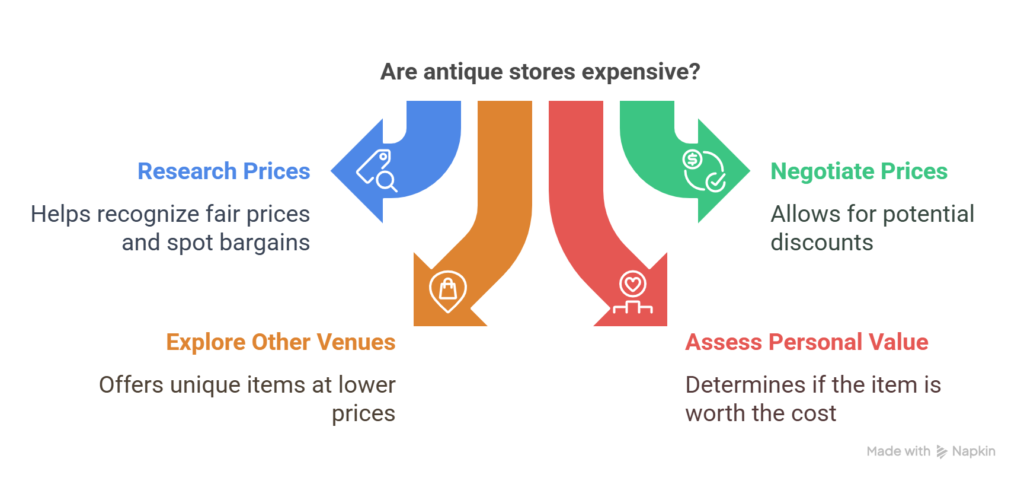
Researching specific items or styles you’re interested in can help you recognize fair prices and spot bargains. Familiarize yourself with market trends and comparable sales to make informed decisions.
Tips for Negotiating Prices
Don’t hesitate to negotiate. Many dealers expect it and price items accordingly. Approach negotiations respectfully, and be prepared to discuss the item’s condition and market value to justify your offer.
Explore Different Places to Shop
Beyond traditional antique stores, consider visiting flea markets, estate sales, and thrift shops. These venues often offer unique items at lower prices.
Antique vs. Vintage: What’s the Price Difference?
Understanding the distinction between “antique” and “vintage” can clarify pricing:
- Antique: Typically refers to items over 100 years old.
- Vintage: Generally applies to items at least 20 years old but less than 100.
Vintage items are often more affordable than antiques due to their relative abundance and younger age.
Can You Really Find Bargains at Antique Stores?
Yes, bargains are possible. Success often depends on timing, location, and diligence. Regular visits and building relationships with dealers can increase your chances of finding great deals.
When to Spend More and When to Save in Antique Shopping
Deciding when to invest in a pricier piece or opt for a more affordable one depends on:
- Personal Value: How much the item means to you.
- Investment Potential: Whether the item’s value is likely to appreciate.
- Intended Use: If the piece will be a focal point or a complementary addition.
Frequently Asked Questions: Are Antique Stores Expensive?
- Why are some antiques more expensive than others?
Some antiques are rare, in excellent condition, or highly sought after—these qualities naturally raise the price. - Can you negotiate prices at antique stores?
Yes, many antique stores are open to negotiations. It never hurts to ask respectfully if there’s flexibility in pricing. - Are antique stores always expensive?
Not always. While some items can be pricey, many stores also offer affordable pieces—especially if you’re willing to search. - Where can I find cheaper antiques?
Estate sales, thrift stores, flea markets, and even online listings often have antiques at lower prices than traditional stores. - Is shopping online for antiques cheaper than going to a store?
Sometimes. Online options can offer better deals, but be sure to factor in shipping and verify the item’s authenticity. - Does the condition of an antique affect the price?
Absolutely. Items in better condition typically cost more, especially if they retain original features or finishes. - Are all items in antique stores old and valuable?
Not necessarily. Some stores also carry vintage or retro items, which may be less expensive but still carry unique charm. - Why do some antique stores seem overpriced?
Prices may reflect the store’s location, operational costs, or the perceived value of the item by the seller. - How can I tell if an antique is fairly priced?
Research similar items beforehand, compare prices across different sellers, and trust your instincts on value. - What’s the best time to buy antiques at a discount?
End-of-day visits, off-season months, or multi-day events like estate sales often present the best opportunities for deals.
In conclusion, while some antiques can be expensive, many factors influence their pricing. By understanding these elements and employing strategic shopping techniques, you can find valuable and affordable treasures that enrich your collection and living space.